Landscapes of Familiarity
The Seto Inland Sea, sometimes called the Mediterranean of Japan, holds more than three thousand small islands. Among them is a small cluster of “Art Islands”, where art, landscape and architecture have been used in unusual experiments in ecological remediation. Once home to modest fishing villages, these islands became sites of industrial extraction in the early twentieth century, leaving behind abandoned refineries, defunct mines and contaminated brownfields. In recent years the Japanese government and large corporations have been turning them into destinations for contemporary art and eco-tourism.
At about 133 acres, Inujima is small for an island but large for a designed object, and that double scale ran through the whole studio. Instead of treating the island as a site for designed objects, we took the more ambitious position of treating the entire island as a designed object.
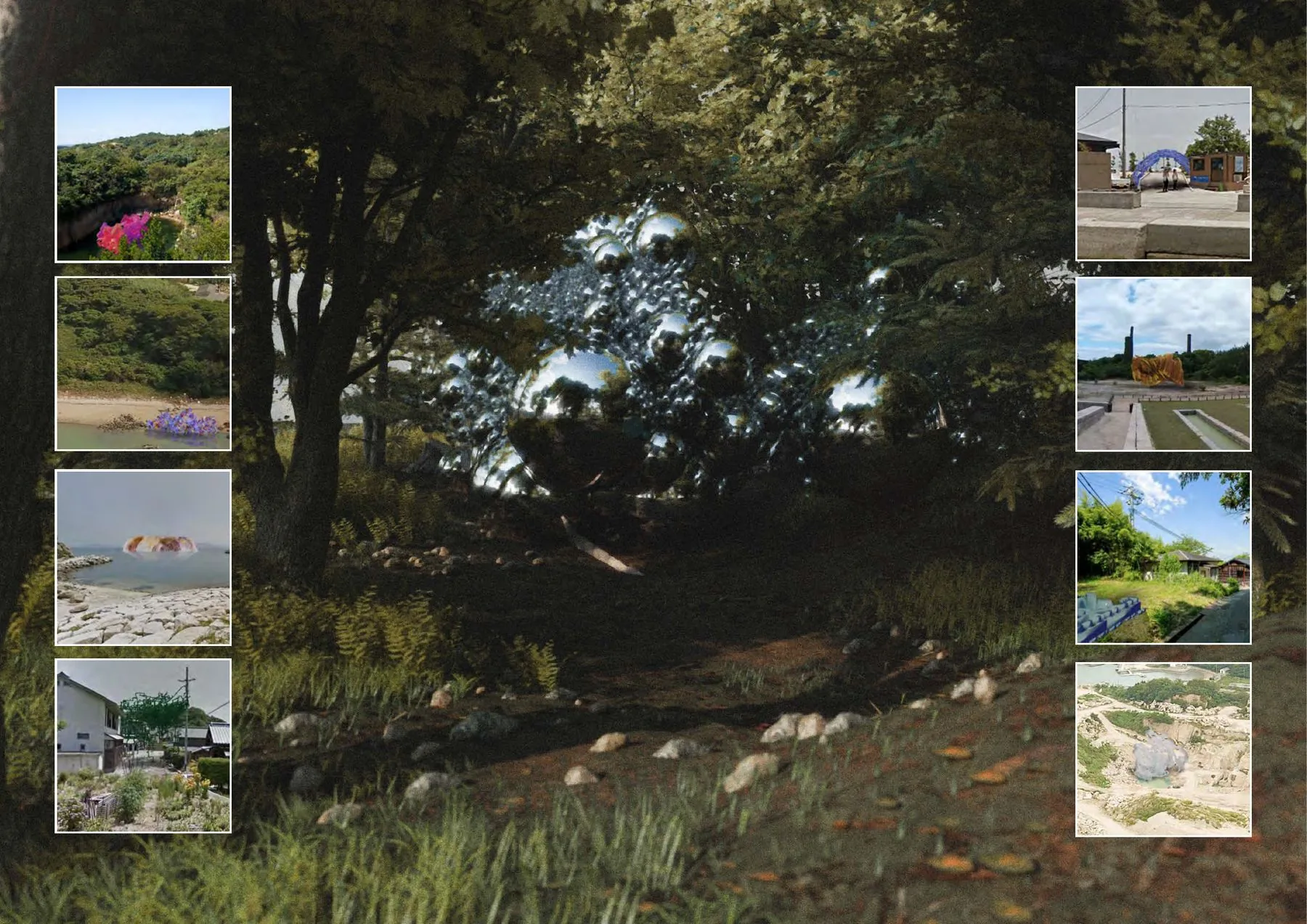
Inujima is open to visitors from April to November. Its art museum and galleries are very popular, but visitors tend to focus on the art and almost ignore the rest of the island and its natural beauty. To shift that focus and spread attention across the island, the project proposes a game of “art hunting”.
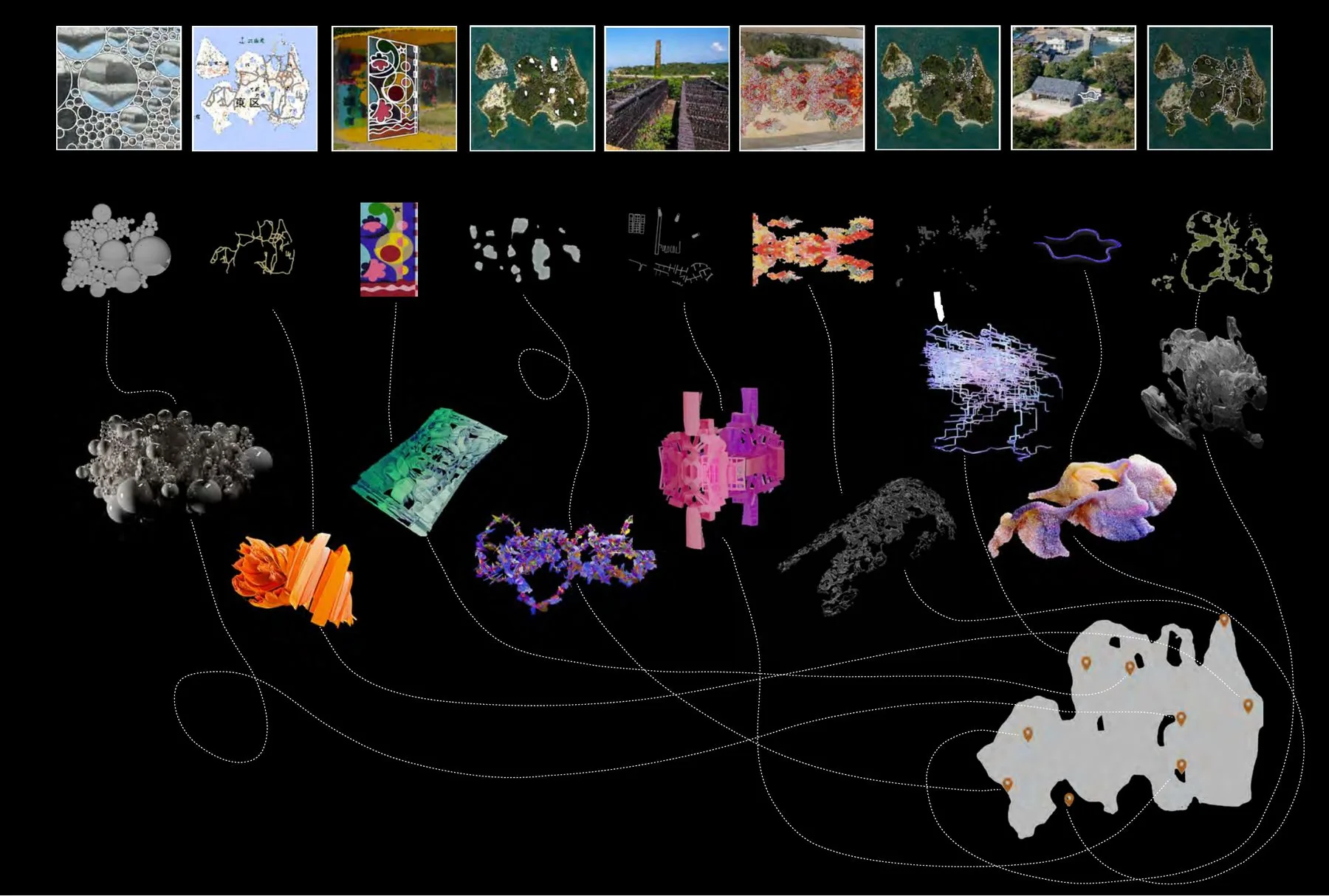
Using existing objects, situations and characteristics of the island as information, a series of sculptures was made to be scattered through its landscape. Reusing the island’s own material plays with the familiarity of the place and joins it to ecological thinking: returning parts of the island to itself lets several versions of the same objects coexist. The hunt becomes a sensory and conceptual challenge for the people who take part.